10 Reasons FSBOs don’t succeed.

Homeowners trying to sell their homes on their own — for-sale-by-owners (FSBOs) — are driven by several reasons. Although most of them want to save money that they would have otherwise spent on real estate commissions, a few others take the FSBO route because they feel they don’t need a professional to sell their home.

Whatever the reason for attempting to sell solo might be, data from a National Association of Realtors survey shows that less than 10 percent of FSBOs actually sell.

1. Too many people to negotiate with

Those deciding to take the FSBO route often have to negotiate with many people. Some of them are likely to be:

  • The buyer, seeking the best possible deal.
  • The buyer’s agent, who represents the buyer’s best interest.
  • The buyer’s attorney (in some regions of the nation).
  • Home inspection companies, working for the buyer, which are likely to find some problem or the other with the house.
  • Your bank, in case it’s a short sale.
  • The appraiser, if the home’s value needs to be assessed.

Without the help of experienced real estate agents, dealing with so many different parties alone is often a tough task for homeowners.

2. Homeowners do not know how to prepare the home for sale

A majority of homeowners don’t know about the prelisting tasks that FSBOs should do before they list their home for sale. These usually include:

  • Decluttering.
  • Painting the rooms with a fresh coat of paint.
  • Getting necessary repairs done.
  • Getting the home floors and carpets cleaned by professions.
  • Ensuring curb appeal of the home.
  • Replacing outdated light fixtures.

Because homes for sale by owners just have one chance to impress potential buyers, neglecting these home sale preparation tips often reduces the homeowners’ chances of selling the house.

3. Owners do not know how to screen potential buyers

FSBOs often have no idea about the difference between prequalification and preapproval, and they don’t know that buyers should ideally be preapproved or at least prequalified.

No wonder they let unqualified buyers inspect the house and waste their precious time. Not knowing if a buyer has the ability to purchase the home acts as a big deterrent for homes for sale by owners.

4. Owners fail to solve buyer’s queries

Handling inquiries from buyers on their listings and coordinating showings for their homes are prerequisites for making a sale. However, many homeowners either aren’t able to handle such inquiries on their homes or don’t have the time for them.

Even organizing showings might become an uphill task at times. Because these days potential buyers and their agents want quick responses to their inquiries, they don’t think twice before moving on to the next potential property if their inquiries and requests are unanswered.

5. Owners don’t understand the concept of golden time

According to this concept, homeowners get the most money for their homes in the first week of putting the property on the market. The longer homes for sale by owners stay on the market, the less money people will be willing to offer for them.

If a buyer tries FSBO first and then hires an agent, the buyer would have already lost the “golden time” window. This will eliminate the buyers who have already viewed the home, might have offered unrealistically low prices and have already moved on.

6. Owners fail to understand the contract procedures

The contract to buy a home involves much more than just the price offered by the buyer. Also, real estate contracts have lots of timelines and clauses and involve several common contract contingencies, such as inspections and mortgages.

Many FSBOs don’t have a firm understanding of such contracts and might not know what they are agreeing to or how to negotiate particular parts of the contract.

7. FSBOs don’t know how to handle the home inspection findings

Home inspections almost always find some issues with houses even when they are relatively newer structures. In such cases, the buyer requests problems be fixed or corrected before moving forward with the transaction.

However, many FSBOs believe that there is nothing wrong with their home, which is why they refuse to address the issues brought forward by home inspections. As a result, the offer falls through.

8. FSBOs incorrectly price their homes

FSBOs often price their homes incorrectly due to lack of experience. They set the price too high, which hinders their chances of closing the deal.

9. FSBO homes lack exposure

Homes for sale by owners are often listed on a few websites, but there are many that don’t allow FSBOs to list their property. Thus, FSBOs are unable to give their homes adequate exposure in the market.

However, when buyers hire a real estate agent, the professional can give a property online exposure as well as exposure in the local real estate segment of the newspaper. The agent even has tools to extend the exposure further, which FSBOs don’t have.

10. FSBOs fail in the closing process

Even after an offer is accepted, many things still need to be done prior to the closing. For instance:

  • Get the inspections completed within the allotted time.
  • Ensure the attorney(s) approve contracts.
  • Ensure that instrument survey is ordered.
  • Check if the buyer has obtained written mortgage commitment.
  • Find out if title work is reviewed.
  • Learn whether abstract is redated.

With so many things acting against FSBOs, it’s natural to find very few homes for sale by owners in the market.

Written by Cheryl Jensen, originally posted on http://www.inman.com/2015/07/20/10-reasons-why-for-sale-by-owners-fsbos-fail/


Co-Op vs. Condo

The New York City housing market is truly a beast of its own. We are living in a world where you can’t simply buy a house, white picket fence, and start planting the seeds of your American Dream. Instead, our homes are divided into a series of different housing types. For those of you looking to buy, or simply for those of you looking to understand more about the housing industry in the city, here is a breakdown of the most popular forms of home ownership in New York City:

Cooperative

Roughly 75 percent of the Manhattan housing inventory is comprised of co-ops. Unlike a condo, co-ops are are owned by a corporation. This means, when you buy an apartment that is in a co-op building, you are not actually buying real property (like you would in a condo). You are in fact, buying shares of the corporation. These shares entitle you to a proprietary lease, which relates your relationship to the building close to that of an investor, rather than a condo building, where you are the outright owner of your specific unit. Usually, the larger the apartment, the more shares you will have in the corporation you have bought into.

Now that you know what it is you are buying, we can now look into how a co-op differs from a condo. First off, the approval process for co-op buildings is significantly more intensive than in condominium buildings. Co-op shareholders, unlike condo residents also pay a monthly maintenance fee to cover building expenses and upkeep like heat, hot water, insurance, staff salaries, real estate taxes and the mortgage debt of the building. Assessments on the building can also be incurred on the building and will (sometimes) drastically affect the value of the property you are considering.

The infamous co-op board sets their own standards in terms of the approval process as well as how the building is managed. Seeing that everyone owns shares in the building, the community as a whole is more concerned with who the building does or does not allow into the building. Co-op boards also require an interview (or interviews) to meet you and ask any questions regarding the information you provided. They can approve or deny any applicant as they choose. The co-op buying (and selling) process is tricky one, where a real estate broker will certainly come in handy.

Condominium

Condominium apartments differ from co-ops seeing that you will be owning real property. Think of purchasing a condo like purchasing a house in the suburbs, the purchaser is given an actual deed to the property purchased. Seeing that you own real property rather than shares in a building, each individual apartment will receive a separate tax bill from the city (rather than having your taxes be complied into monthly maintenance as seen in co-ops). Condo owners are required to pay monthly common charges similar to the maintenance charges in a co-op, however these charges tend to be lower than in co-ops because there is no underlying mortgage for a condominium building.

The straightforward nature of buying a condo plus the fact that in some cases you can finance up to 90 percent of the purchase price and sublet your apartment at will makes this form of ownership a top choice for flexibility, especially among investors, foreign buyers and parents purchasing for their children. That being said, there are significantly fewer condos to come by. The majority of the New York City real estate market takes the form of a cooperative, while most new construction tends to be condo. Many talk in high regards toward condos, however the community that is formed within a cooperative building is significantly closer. Condo owners tend to keep to themselves, seeing that they own their property, while co-op owners see their role as part of the whole, rather than as an individual. Either way both forms of ownership provide different costs and benefits to consumers. If you are looking for an apartment, I would recommend looking at both forms of property. Consult with your broker, move quickly (in this market you have to), and eventually find a house you can make your home.

Info originally on: www.huffingtonpost.com

Is this Michigan’s priciest burger?

BIRMINGHAM, MI – Want to grab a burger? Grab your wallet.

The Rugby Grille at Birmingham’s toney Townsend Hotel sells its Foie Gras Burger for $55, making it possibly the priciest burger in Michigan. Forget everything you think you know about burgers before sinking your teeth into this one.

Yopek described his creation as “pretty much an opulent hamburger” to The Birmingham Eccentric. The eight-ounce burger, on the menu for three weeks now, is made of waygu beef, sweet onion jam, seared foie gras, arugula, braised short rib, parmesan aioli, burgundy truffles and Thomasville tomme cheese, and with a side of burgundy truffle fries.

Food blogger Grace D. of Birmingham raved about it on Yelp:

“First time dining here and it was delicious. Sat up at the bar and had a nice glass of wine with the new Foie Burger. This Burger is outstanding! Served on a delicious brioche bun with braised short ribs, onions, liver, a slightly sweet sauce and topped with melted cheese. Served with a side of truffle fries, which require no ketchup! Yummy!”

Information originally posted on: Patch.com


What’s ahead for the housing market in 2016


2016 is the year to stop renting and start buying. (Big Stock)

We all have a big financial stake in housing — as homeowners, renters, landlords and/or taxpayers.

Let’s consider the major macroeconomic trends in 2016 that will significantly impact those stakes.

Homeowners should enjoy another year of solid gains in house prices. Prices have been moving steadily higher since the housing bust hit bottom four years ago and should post another gain in the middle single digits. With a bit of luck, prices nationwide could reach close to the all-time peaks seen in the housing bubble a decade ago.

This time, however, house prices are on very solid foundations; they are supported by homeowners’ incomes. In the bubble, too many of us got into homes we couldn’t afford by committing to mortgages that made no financial sense. Of course, millions defaulted on these loans, resulting in the financial crisis and the Great Recession.

No one is getting crazy mortgages today. Regulatory changes in the wake of the crisis and chastened (thus much more cautious) mortgage lenders make that all but impossible.

The financial affliction of negative homeowners’ equity, in which the house is worth less than the mortgage due, is fast fading. At the worst of the problem, close to 17 million homeowners were underwater. By the end of 2016, that should be down to a more typical 5 million homeowners.

Market conditions should be good for owners looking to sell their homes. The historically low number of new and existing homes for sale makes it even more of a seller’s market. Many homeowners appear to have a psychological antipathy to selling until prices have fully recovered from the bust, so this could be an auspicious time for those willing to sell.

Home-buyers have to grapple with the higher prices and lack of inventory, but they should benefit from an improving job market, continued low mortgage rates and easier credit. With the economy set to achieve full employment in coming months, the so-far lackluster wage growth is picking up. Fixed mortgage rates are unlikely to stay below 4 percent for much longer, but they don’t appear set to rise sharply either.
First-time home-buyers, in particular, should have an easier go of it. The Federal Housing Administration, the government agency that primarily helps first-timers get mortgages, cut its fees last year and may do so again soon as its finances continue to improve.

Fannie Mae and Freddie Mac, the big mortgage lenders owned by taxpayers since the crisis, are also working to lower the high credit bar many potential buyers have struggled to get over. The credit scores that borrowers need to get a loan are still very high by historical standards, but they have finally begun to normalize.

For renters, 2016 will be a difficult year, as rents continue to rise strongly in most parts of the country. The problem is that demand for rental units has been outstripping supply, and vacancy rates are now about as low as they have been in 30 years. Fueling demand are the millennials who are finally finding jobs and striking out on their own, along with households that have lost their homes in foreclosure, and more empty-nesters looking to downsize and simplify.

Builders are ramping up construction of apartments, but in most places they still aren’t meeting the demand, especially for affordable rental units in urban centers. Rents will continue to rise strongly.

It is worth noting that builders have also been slow to increase construction of new single-family houses, which are also in increasingly short supply. Housing has swung from being vastly oversupplied in the bust to being in what more and more is a shortage. This is a problem mainly for affordable, starter homes.

Of course, quickly rising rents are a boon to landlords. It’s no exaggeration to say that 2016 may be the best year ever for those fortunate enough to own multifamily property. Vacancy rates are low, rents high, and prices for apartment complexes have never been better. Wealthy foreign investors from places including China and Germany are clamoring to own U.S. real estate.

In general, taxpayers should be pleased with 2016 as they reduce their support to the housing market. During the crisis, the government had no choice but to step into the void left by the failing financial system and ensure that homeowners could still get a mortgage. Thus, taxpayers’ takeover of Fannie and Freddie; they are too big to fail.

Fannie and Freddie will remain under government stewardship for the foreseeable future, but they are selling to private financial institutions more of the risk that they take on when backstopping mortgage loans. This risk-sharing could be expanded even more, as private investors seem very interested in taking on more risk, and Fan and Fred should oblige.

To sum up, homeowners, landlords and taxpayers should have a good 2016; renters, not so much. Gauging trends in housing is often an intrepid affair, but these trends seem firmly in place for the coming year.


Written by Mark Zandi, Originally posted on: https://www.washingtonpost.com


7 Restaurants you can walk to from Cobo

Lafayette Coney Island

Not a frequent Detroit visitor? Lafayette’s take on the Coney dog (hot dog, chili. mustard and onions) is a must.

118 West Lafayette Boulevard; 313-964-8198


Dime Store

Featuring both breakfast and lunch, the Dime Store menu offers a smorgasbord of fresh-made foods ranging from omelettes to a killer seared brussel sprouts salad.

719 Griswold (inside the Chrysler House); 313-962-9106


Anchor Bar

Grab a beer and your typical bar fare at the Anchor, which houses decades-worth of Detroit sports and journalism memorabilia for browsing.

450 W Fort; 313-964-9127


Tommy’s Detroit Bar and Grill

Housed in a building that was built in 1840, Tommy’s historical significance is part of the reason for its success. According to its website, the pub once served as an outlet for the underground railroad.

Menu options include burgers, chicken wings and homemade corned beef.

624 3rd St; 313-965-2269

Michael Symon’s Roast

Named the Free Press’ Restaurant of the Year in 2009, Roast is a destination dining spot with a modern flare and an excellent happy hour.

Located inside the Westin Book Cadillac Detroit.

24 Grille

Located on the first floor of the Westin Book Cadillac Detroit building, 24 Grille offers classic regional and American dishes in a trendy, yet comfortable environment.

204 Michigan Ave; 313-964-3821

Cobo Joe’s

A stone’s throw from Cobo, this casual dining spot offers homemade BBQ, burgers, pizza and more. Read their menu here.

422 West Congress; 313-965-0840

Cobo Joes

Originally posted on: www.freep.com


25 Safest Suburbs in Michigan

Safety is a concern for most, especially when deciding on where to live. Below is a list of the 25 safest Suburbs in Michigan according to Niche.com

Niche ranks US suburbs based on assaults, burglaries, and violent crime rates. A high ranking indicates that a suburb has low crime rates across multiple categories.

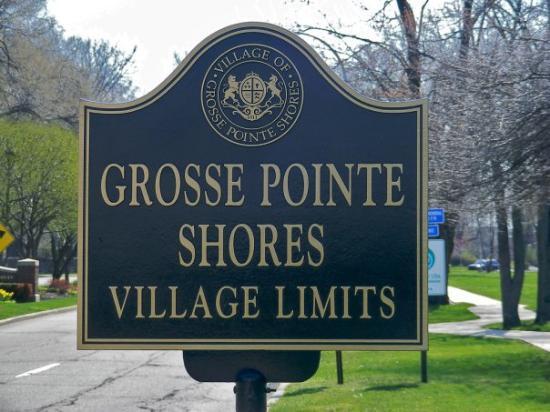
grosse-pointe-shores

http://987ampradio.cbslocal.com/

Village of Grosse Pointe Shores Wayne County, Michigan


2  Thetford Township Genesee County, Michigan

Bloomfield Hills Oakland County, Michigan

Wolverine Lake Oakland County, Michigan

Pinckney Livingston County, Michigan

Grosse Ile Township Wayne County, Michigan

East Grand Rapids Kent County, Michigan

New Baltimore Macomb County, Michigan

Hamburg Township Livingston County, Michigan

10 Huntington Woods Oakland County, Michigan

11 Zilwaukee Saginaw County, Michigan

12 Rochester Oakland County, Michigan

13 Rockford Kent County, Michigan

14 Grand Ledge Eaton County, Michigan

15 Spring Lake Ottawa County, Michigan

16 Richfield Township Genesee County, Michigan

17 Lincoln Township Midland County, Michigan

18 Brighton Livingston County, Michigan

19 Tittabawassee Township Saginaw County, Michigan

20 Romeo Macomb County, Michigan

21 Mattawan Van Buren County, Michigan

22 Marysville St. Clair County, Michigan

23 Thomas Township Saginaw County, Michigan

24 Essexville Bay County, Michigan

25 Northville Wayne County, Michigan


Information originally posted on local.niche.com

Windmill Pointe Park

I remember hearing all of the details about Windmill Pointe Park before I moved to Grosse Pointe Park and I was beyond excited. Windmill Pointe has its on movie theater, now with two screening rooms, where you can enjoy some of the new movies. I think Joel’s favorite part about the theater is the super-comfy electric recliners that you get to enjoy.

The park also has a swimming pool, play area, and gym. The gym is located upstairs and I love the view. On days I feel like cutting corners, I look out at the water and think of boat season and swimming pools. There are fitness classes, activities for children, and a basketball court.

For Grosse Pointe Park Residents, that do not yet have their passes, see my post about how to obtain your pass.

Park Pass Info for G.P.P residents

Applications for Park Passes are avaible on the Parks and Recreation Forms Page.

Homeowners applying for passes for the first time may access the Park Pass Application at the above link.  Homeowners must have valid proof of residency, i.e. driver’s license, bank statements or bills. New homeowners must also have turned in the Property Transfer Affidavit, Principle Resident Exemption and have a valid Certificate of Occupancy.

Renters must apply for park passes annually. Applications may be accessed online at http://www.grossepointepark.org or picked up at the Public Service Department at City Hall. Passes will be mailed back after the landlord has verified tenancy and the Public Service Department has verified that the Certificate of Occupancy is valid. NO EXCEPTIONS. Lease agreements are not accepted as proof of tenancy.

At any time, you may be asked for photo I.D. Misuse of your park pass may result in revocation. Revoked passes can be suspended or cancelled for the remainder of the season. In addition, if replacement is necessary, a fee of $20.00 will be charged. Driver Licenses and other forms of identification will not be accepted for entrance to the parks. Gate guards will only accept valid passes for entrance. Revoked passes will be turned over to the Public Safety Department, which will in turn make a decision as to whether or not they may be reinstated.

Residents age 17 and under will be allowed 1 guest per visit to the City Parks. Residents 18 and older will be allowed 3 guests per visit. GUESTS MUST ACCOMPANY YOU WHEN YOU ENTER THE PARKS.

Park Pass Rules

It is the goal of the City of Grosse Pointe Park to continue to provide to you, the resident, the best possible service and recreational facilities. We ask that you read the following rules with regard to Park Passes. It is extremely important that everyone complies with these rules so that we may all enjoy our City Parks.

  1. Renter Passes are valid for one year.
  2. Homeowner Passes are valid for four years.
  3. Park Passes are required for all residents age 10 and older and are non-transferable. (For purposes of registration of younger children in Park activities, we ask that all members of the family, even those not yet eligible for a Park Pass, be listed on your Park Pass Application.)
  4. All family members age 18 or older, who are not the homeowner, MUST show proof of residency by providing three approved forms of identification (i.e. driver’s license, state identification card, voter registration card, etc.)
  5. City Ordinance allows NO MORE than two unrelated persons to receive passes at any address.
  6. Business Owner Passes are given to the business owner and one other family member who resides with him/her.
  7. Lost passes will be replaced ONCE per season by an adult at a cost of $20.00 at the Public Service Department at City Hall. Office Hours are Monday through Friday, 8:00 am – 4:00 pm. Telephone (313) 822-4365.
  8. Households that require caregiver passes will be charged $25.00 per household and only 1 such pass will be issued annually.
  9. Residents with guests on an extended visit may purchase Temporary Passes (maximum 2 per household) for $10.00 each at the Public Service Department.
  10. Please allow 2 weeks for processing of all passes.


Info from: http://www.grossepointepark.org/index.php/park-pass-info

Whole Grain Blueberry Muffins

IMG_8457 So I haven’t mastered meal prepping yet and I can be guilty of skipping breakfast when in a rush. However I have started making something that helps me start out my day and feel healthy and sustained too.


Homemade blueberry muffins! Too help simplfy things, I usually measure out the dry ingredients for two – now upgraded to 3! Then mix up the wet ingredients when I’m ready to bake.


IMG_8459

Keep the extras stored until I need to replenish


Ingredients

1 1/4 cups whole-wheat flour, spooned, and leveled

1 cup old fashioned rolled oats

1/4 cup flaxseed meal (available at natural-food stores, I found at Meijer)

1/4 cup pecans

1 teaspoon baking powder

1 teaspoon baking soda

1/2 teaspoon kosher salt

1 cup plain low-fat yogurt ( I like to use blueberry or strawberry instead of plain)

1/2 cup packed light brown sugar

3 tablespoons unsalted butter, melted

1 tablespoon grated orange zest

1/4  cup orange juice

1 large egg

1 teaspoon pure vanilla extract

2 cups fresh blueberries or one bag frozen blueberries


Directions

  1. Heat oven to 375 F. In a food processor, process the flour, oats, flaxseed meal, pecans, baking powder,  baking soda, and salt until finely ground. Optional: you can line the muffin pan with paper liners. I do not, I grease the pan instead.
  2. In a large bowl, whisk together the yogurt, sugar, butter, orange zest, juice, egg, and vanilla. Add the flour mixture and mix just until incorporated (do not overmix). Fold in the blueberries.
  3. Divide the batter evenly among the muffin cups. Bake until a toothpick inserted in the center comes out clean, 22 to 25 minutes.


IMG_8462


Recipe found on RealSimple.com


Fun things to do around Detroit

Campus Martius Park – Whether it’s bright and sunny or a cold winter evening. There is something to do at Campus Martius. During the summer, they have a beachy-feel sand area for kids to play. A bar and lots of seating to sit and enjoy a drink. People watching in the heart of downtown, definitely makes for a fun date. They also have an outdoor theater.  During the colder months, they have an ice skating rink and skate rental.

Michigan Science Center – One of my favorite trips as a kid and still today. A chance for kids and kids at heart to explore, learn and have fun at the same time.

Charles H. Wright Museum of African American History – World’s largest museum dedicated to African American history and culture. Filled with exhibits that are moving and inspiring. If you haven’t been there yet, add it to your check list.

Detroit Institute of Arts – Filled with beautiful works of arts and exhibits that are intense and thought provoking.


Pewabic Pottery – Located on Jefferson, it’s a ceramic studio and school that has been around since 1903! Pewabic Website

Riverwalk -Such a dramatic change and a fantastic addition to Detroit. Take a walk on a sunny day and view the beautiful city! Detroit Riverfront

Eastern Market – A place to buy fresh fruits and vegetables, local products, and have lunch at one the restaurants.  Eastern Market